


The Best Handgun Ammo for Every Situation (And What to Skip)
Ever wonder what makes a handgun round actually do its job when you pull the trigger? At its core, handgun ammo is a self-contained cartridge—a primer, powder charge, and bullet packed into a metal case—that ignites in a split second to send a projectile downrange with controlled force. The beauty of modern handgun ammunition lies in its versatility: from light-recoil rounds for practice to potent hollow points that expand on impact for personal defense, there’s a load tailored to nearly any shooting need. Simply match your bullet weight and type to your firearm’s barrel twist and your intended purpose, and you’ll get reliable, repeatable performance shot after shot.
What Actually Happens Inside the Barrel When You Pull the Trigger
When you pull the trigger on a loaded handgun, the striker or hammer slams into the primer, igniting a chemical compound that sends a flash through the flash hole into the case. That spark instantly burns the gunpowder, converting solid propellant into a rapidly expanding gas. The pressure spike, often exceeding 30,000 PSI, forces the bullet to overcome the rifling’s friction and begin its spin. As the projectile travels down the barrel, gas continues to expand behind it, while the case expands to seal the chamber. The bullet exits the Shotgun Ammo for Sale muzzle, and the residual pressure vents as a muzzle blast. Handgun ammo barrel pressure determines velocity, and firing sequence inside the barrel is a violent microsecond of controlled explosion, not a simple push.
Breaking Down the Four Stages of Ignition and Propulsion
The journey begins the instant the firing pin strikes the primer, crushing the shock-sensitive compound and spraying a jet of white-hot flame into the case. This is **ignition**, the first stage, where the primer’s explosion doesn’t launch the Ammunition for Sale bullet—it only lights the fuse for the powder charge. Milliseconds later, that flame ignites the propellant, initiating the second stage: rapid, controlled combustion. The powder burns from the primer flash outward, converting solid grains into immense volumes of hot, expanding gas. This gas builds pressure, driving the third stage—the bullet’s initial movement from the case mouth into the forcing cone and rifling. The fourth stage, propulsion, is sustained burn: as the bullet accelerates down the barrel, the gas continues to expand, maintaining pressure until the projectile exits the muzzle, followed by a venting roar of unburnt powder and gas. The entire sequence—from primer strike to muzzle exit—takes about one millisecond, a blink far faster than your brain can register the recoil.
Ignition sparks the powder, combustion builds pressure, movement starts the bullet, and propulsion sustains it down the bore—four stages, one seamless ballistic event.
Why Bullet Weight and Powder Charge Dictate Recoil Feel
Heavier bullets push back with a slower, more deliberate shove because they build momentum gradually and stay in the barrel longer, which spreads the recoil over a wider time window. Lighter bullets, by contrast, snap out fast, giving you a sharp, quick jab in the palm. Powder charge works the same way—a big charge of fast-burning powder slams the slide rearward with a violent snap, while a smaller or slower charge produces a softer, rolling push. Together, these two factors define the entire recoil impulse you feel, so you can tune a handgun’s personality just by swapping loads. A 115-grain +P feels snappy; a 147-grain standard pressure feels like a firm nudge.

How to Match a Cartridge to Your Specific Handgun’s Purpose
Matching a cartridge to your handgun’s purpose starts with defining the job. For concealed carry, prioritize defensive handgun ammo that expands reliably and penetrates to FBI standards—typically a 9mm +P JHP in a compact barrel delivers consistent performance. For competitive shooting, choose a lighter recoiling cartridge like .38 Super or 9mm minor to facilitate faster follow-up shots, while prioritizing accuracy over raw power. If your purpose is hunting, step up to a magnum revolver cartridge such as .44 Magnum or 10mm Auto, ensuring sufficient energy for ethical kills on medium game. For target practice, select affordable FMJ handgun ammo with a bullet weight that mirrors your carry load—this maintains point-of-impact similarity without breaking your budget. Always test your chosen cartridge through your specific barrel length, as velocity shifts can alter expansion and accuracy dramatically.
Selecting Between Full Metal Jacket and Hollow Point for Range vs. Defense
For range work, full metal jacket (FMJ) rounds are the logical choice because their flat, unexpanding base feeds reliably and keeps cost 7mm-08 Ammo for Sale per trigger pull low, while their lack of deformation preserves barrel life during high-volume practice. Defensive loads demand hollow points, which expand upon impact to create a larger wound channel and reduce over-penetration risk in home scenarios. The trade-off is simple: FMJ’s hard nose can pass through a threat and drywall, whereas hollow points—though pricier and sometimes finicky in short barrels—deliver controlled stopping power. Always verify your handgun cycles your chosen hollow point reliably before carrying it, since range FMJ failure does not predict defensive ammo performance.
Q: Can I practice with FMJ but carry hollow points in the same magazine?
A: Avoid mixing them. FMJ feeds differently than hollow points during slide cycling, so practice exclusively with your carry load to ensure consistent function and point-of-impact. Use FMJ only for separate, dedicated drills.
Understanding Caliber, Grain, and Velocity Without the Sales Pitch
Caliber is just the bullet’s diameter—think of it as the starting line, not the whole race. Grain tells you the bullet’s weight, and heavier grains usually push deeper but drop faster, while lighter grains zip out of the barrel with flatter trajectories. Velocity is the real game-changer: it drives expansion and energy on target, but don’t chase the highest number on the box. A snappy +P load in a compact gun often hurts accuracy more than it helps. Instead, match grain and velocity to your handgun’s barrel length—shorter barrels lose speed, so a lighter, faster round may underperform. Test a few options at the range, feel the recoil, and check your shot placement. That’s how you choose ammo by performance, not hype.
Stop obsessing over specs—caliber, grain, and velocity only matter when balanced against your gun’s barrel and your actual shooting comfort.

Reading Ballistics Data So You Can Predict Performance Downrange
To truly master your handgun, you must stop at the muzzle and start with the data. Reading ballistics data so you can predict performance downrange isn’t about memorizing numbers; it’s about decoding the bullet’s story. The muzzle velocity tells you your starting energy, but the ballistic coefficient reveals how quickly that energy fades against air resistance. A flat trajectory from a hot 9mm load means less holdover at 50 yards, while a heavy .45 ACP with a poor coefficient will drop dramatically. Crucially, look for the velocity at 25, 50, and 100 yards; this shows your actual retained speed for expansion. By plotting that drop and drift, you translate raw spec sheets into confident shot placement. Ultimately, predicting downrange performance turns your ammo choice from a guess into a precision tool, ensuring your hollow points open at the exact distance you intend.
Translating Muzzle Energy and Trajectory into Real-World Accuracy
Muzzle energy, expressed in foot-pounds, tells you the work potential at the barrel, but it does not guarantee a flat trajectory or a tight group. To translate that energy into real-world accuracy, you must pair it with the bullet’s ballistic coefficient and sight height, because a high-energy round that drops sharply at 25 yards will still miss a vital zone if your zero is miscalibrated. Trajectory charts, usually in inches of rise or drop from the line of sight, let you convert raw power into a usable hold-over or hold-under at specific distances. For defensive handgun ammo, a 124-grain load with 350 ft-lbs at the muzzle might rise 1.2 inches at 15 yards and drop 3.5 inches at 50 yards, so you adjust your point of aim accordingly. Real-world accuracy emerges only when you match that trajectory data to your actual shooting distance and grip stability, not just the energy figure.
Q: How do I translate muzzle energy into 7mm WSM Ammo for Sale a usable aim point for a 10-yard self-defense shot?
A: At 10 yards, muzzle energy matters less than your sight zero; if your gun is zeroed at 10 yards, the trajectory is nearly flat, so use the same point of aim, but if your zero is 25 yards, expect the bullet to strike about 1 inch low at 10 yards, so aim slightly high.
Using Bullet Drop Charts to Zero Your Sights for a Specific Load
To zero your handgun for a specific load, a bullet drop chart shows you exactly where your point of impact shifts at various distances, so you’re not guessing at holdover. Start by shooting at your chosen zero distance—say 15 yards—and adjust your sights until the group matches the chart’s predicted impact. Then, confirm at 25 yards; if the chart says your load drops two inches, but you’re hitting three, your velocity or ballistic coefficient might differ from the published data. *This mismatch usually means you need to chronograph your actual rounds rather than trust the box’s listed speed.* Once your real-world impacts align with the chart’s values, you can lock in that zero with confidence. Zeroing with a bullet drop chart lets you dial in Rifle Ammo for Sale elevation and windage for that exact cartridge, making each shot predictable without wasting ammo on trial-and-error.
Handling, Storing, and Carrying Rounds So They Fire Every Time
To ensure handgun ammo fires every time, treat each round as a precision component, not a commodity. Store ammunition in a cool, dry, airtight container with desiccant packs, as moisture is the primary enemy of primer reliability and powder ignition. Rotate your carried magazine’s ammo every three months, since constant compression and body heat can degrade the propellant’s burn rate and cause failure-to-fire. When loading a magazine, avoid pushing the round’s rim against the feed ramp or letting rounds rattle loosely—both can deform the case mouth or set the bullet back into the casing, which spikes chamber pressure and kills ignition. *The brass’s extractor groove is a handhold, not a stress point, so always press on the rear of the round, never the case wall, when seating it.* Carry spare ammo in a dedicated, rigid holster or pouch that prevents snagging and dirt ingress, and inspect each cartridge before you chamber it—any cracked neck, corroded primer, or loose bullet is a guaranteed misfire waiting to happen.
Spotting Signs of Corrosion, Seating Depth Issues, or Primer Problems
Inspect each cartridge before loading. Corrosion appears as green or white 6.5 Creedmoor Ammo for Sale crusty deposits on the case mouth or primer pocket; even light flecks compromise case wall integrity. Seating depth issues reveal themselves when bullets sit visibly deeper than factory spec or when you measure overall length varying by more than 0.005 inch between rounds—a seated bullet that spins freely in the case indicates neck tension loss. Primer problems include cratered strikes from excessive pressure, flattened primers, or off-center dents that indicate firing pin misalignment. Reject any round with a high-primer that protrudes above the case head; these fail to chamber fully and cause misfires.
How Temperature and Humidity Change the Way a Load Behaves
Temperature and humidity directly alter how a handgun load performs, so you must adapt your storage and firing habits. Heat raises pressure and velocity, making a round feel snappier and potentially causing over-pressure signs, while extreme cold drops both, leading to weak, sluggish cycles or failures to eject. Humidity attacks the primer and powder through the case mouth, degrading ignition consistency and raising the risk of a hang-fire or squib. To ensure reliable ignition in any environment, keep ammo sealed with desiccant packs and let chilled rounds warm inside a pocket before loading.
- High heat increases chamber pressure; reduce your carry load margin in summer.
- High humidity causes powder to absorb moisture, slowing burn rate and lowering 6.5 PRC Ammo for Sale velocity.
- Cold stiffens lubricants on cases specialty sports and bullets, increasing extraction friction and misfeed chances.
- Rapid temperature swings cause condensation inside the box, so always inspect primers before loading.
Choosing Between Factory Loads and Reloads for Consistent Results
For competitive handgun shooters, choosing between factory loads and reloads for consistent results hinges on batch control. Factory ammunition offers remarkable uniformity straight from the box, but lot-to-lot variations can shift your point of impact when you buy a fresh case. Reloading, however, lets you lock in a single powder charge, bullet seating depth, and primer blend across thousands of rounds. This is critical for bullseye or action pistol sports where a 0.1-grain fluctuation alters recoil impulse and accuracy. The catch: your reloading discipline must be meticulous—weigh every charge, inspect case length, and use a quality scale. When you find a load your handgun loves, a Dillon or Lee press delivers identical performance session after session, while factory loads force you to re-zero after every shipment. For match day certainty, handloads give you the reproducibility edge.
What the Headstamp Tells You About Brass Quality and Reusability
The headstamp is your quickest peek into a brass case’s pedigree, and it directly impacts reusability. A military headstamp like “LC” or “FC” typically means tougher, thicker brass built for repeated resizing and reloading, often lasting many firings. Commercial stamps from brands like “Blazer” or “Win” can be fine, but some are known for softer metal that stretches or splits earlier, especially in hot handgun loads. Also, crimped primer pockets—common on NATO brass—require an extra swaging step before reloading, so factor that in. For consistent results, stick to the same headstamp brand every time you reload, because mixing batches changes case capacity and neck tension.
Brass headstamp identification Rimfire Ammo for Sale is the fastest way to sort keeper cases from one-and-done range fodder.
Q: Does a less common headstamp mean worse brass quality?
A: Not always—obscure stamps often come from small commercial lots or foreign military surplus. The real test is consistency: weigh and Handgun Ammo for Sale measure a few cases. If they’re uniform, they’ll reload fine. If weights vary wildly, toss them, as inconsistent case volume wrecks accuracy and pressure stability.
Comparing Standard Pressure vs. +P Loads for Your Weapon’s Limits
When comparing standard pressure versus +P loads, your firearm’s design limits dictate the safe ceiling. Standard pressure ammunition (typically around 35,000 psi for 9mm) operates within the SAAMI baseline, ensuring longevity for older or alloy-framed pistols. +P loads (up to 10% higher pressure) generate increased velocity and recoil, but they accelerate slide velocity and frame wear. Check your manual for explicit +P certification; unrated barrels or unlocked breeches risk case-head failures. For defense, test a box of +P to confirm feeding and extraction, but reserve daily training for standard loads. Matching pressure ratings to your weapon’s metallurgy prevents fatigue cracks, especially in compact polymer frames where the locking block absorbs stress. If unsure, a gunsmith can measure barrel wall thickness and lock-up clearance. Overpressure signs—flattened primers, sticky extraction—are your first warning; stop immediately if they appear.
Standard pressure protects older or marginal guns; +P boosts performance only in explicitly rated firearms—verify your weapon’s limits before exceeding baseline psi.
Common Mistakes Shooters Make With Their Ammunition and How to Fix Them
Many shooters defeat their own accuracy by mismanaging handgun ammo before it ever reaches the chamber. Rotating old defensive rounds back into practice is a prime error, as repeated chambering can set the bullet deeper into the case, spiking pressure and altering point of impact. Fix this by marking carry ammo and retiring it after two unloads. Another common failure is mixing brands or bullet weights in a magazine, which shifts zero and causes fliers mid-string. Commit to one load per session and verify your firearm’s ammo preference at the bench. Finally, storing loose rounds in a range bag invites moisture and debris, which can degrade primers. Keep common mistakes shooters make with their ammunition minimal by storing all cartridges in sealed, labeled boxes. These corrections tighten groups and prevent dangerous malfunctions.
Why Mixing Brands or Lots Hurts Your Grouping at Distance
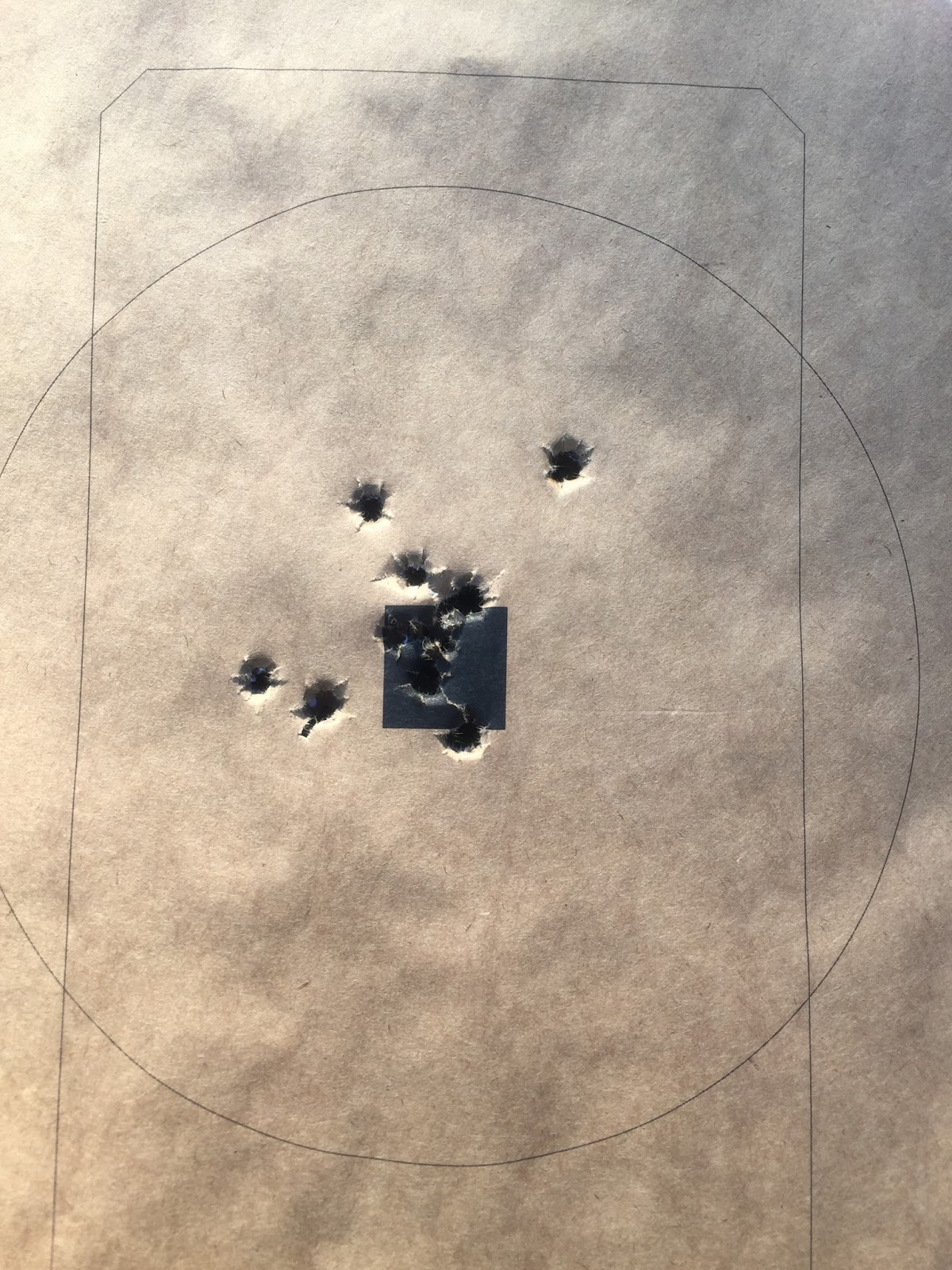
When you mix brands or lots of handgun ammo, you introduce variable pressure curves, bullet seating depths, and powder burn rates that shift your point of impact between shots. Even identical bullet weights from different manufacturers produce inconsistent barrel-time harmonics, so your groups at distance open up horizontally and vertically. A single lot ensures uniform case wall thickness and primer sensitivity, which is critical because consistent lot-specific ballistics are the foundation of precision shooting. At 25 yards, a 0.2-inch difference between loads becomes a 4-inch spread when stacked unpredictably. Always buy enough of one lot number to zero and train, then log the exact load data for each firearm. Do not combine partial boxes to save money; the resulting scatter defeats your purpose.
Determining the Ideal Round Count for Break-In and Function Testing
Figuring out the ideal round count for break-in and function testing isn’t a magic number, but most defensive handguns settle in after 200 to 500 rounds. The real mistake is stopping at one box of fifty and calling it good. You need enough variety—different bullet weights and profiles—to expose feeding issues early. For a carry gun, push past 300 rounds without cleaning to see how carbon buildup affects reliability. A good rule: if you hit two malfunctions in the first 200 rounds, stop and diagnose before shooting more. Don’t waste premium ammo on this; use cheap practice loads, then test your carry load last.
**Q: How many rounds should I fire before trusting my gun for self-defense?**
A: At minimum, 200 rounds of your actual carry ammo plus 300 of practice loads, all without a failure. If it stumbles, reset the count after fixing the issue.