


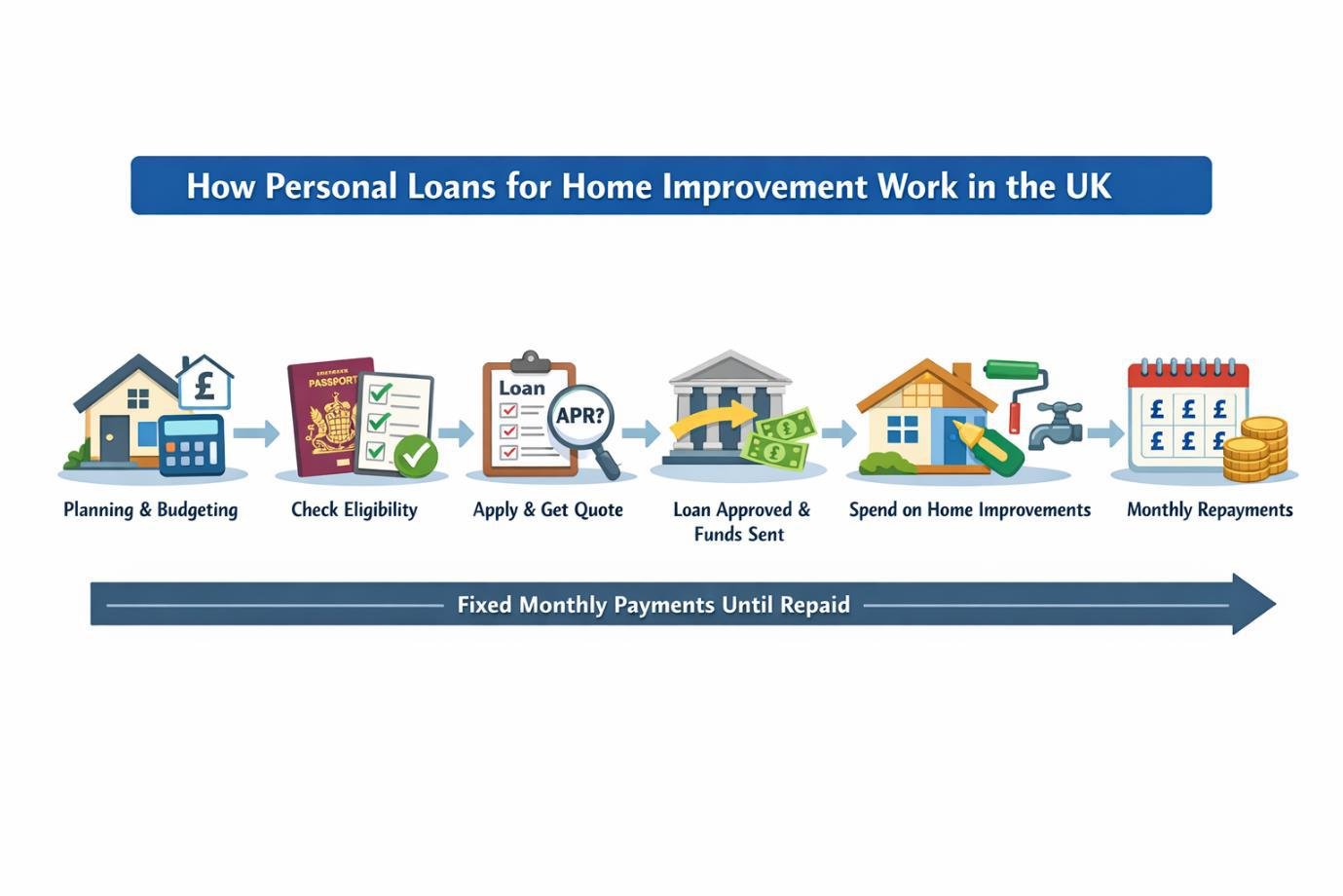
Up to $40,000 is the ceiling for a specific type of consumer debt that many homeowners overlook when they decide it is finally time to fix that leaking roof or replace a kitchen backsplash. That is the limit offered by Discover for a home improvement loan with no origination fee. Most people think they have two choices: save up cash for five years or take out a second mortgage. Neither is strictly true anymore.
The reality of modern home financing is much messier and more varied than a simple “yes” or “no” on a bank application. You might find yourself staring at a pile of contractor quotes, feeling the weight of a potential renovation, and wondering if you are about to make a massive financial mistake. It is a common spot to be in. We have seen it happen to people who thought a small bathroom update would stay under five grand, only to find the subflooring was rotted and the plumbing was a nightmare. Suddenly, you are looking at a twenty thousand dollar problem.
Financing these projects requires a clear understanding of the difference between secured and unsecured debt. It is the difference between risking the roof over your head and simply risking your credit score. If you choose the wrong path, you could find yourself in a position where a botched kitchen remodel leaves you unable to pay the mortgage on the very house you were trying to improve.
Money is a tool, but it is a sharp one. You need to know exactly how much you are borrowing, what it costs you every month, and what happens if the project goes sideways. Let’s get into the mechanics of how this actually works in the real world.
Comparing Unsecured vs. Secured Financing Options
When you decide to borrow for a remodel, the first big decision is whether you want to use your home as collateral. This is the fundamental divide in the lending world. On one side, you have home equity loans. These are tied directly to the value of your house. If you fail to pay, the bank can eventually take the house. It is high-stakes. On the other side, you have personal loans, which are unsecured. As PNC explains, personal loans are unsecured, meaning you do not have to put up your house or car as a guarantee for the money.
Unsecured loans are much faster to get. You don’t need a new appraisal of your property, which can take weeks and cost hundreds of dollars. You just need to prove your income and show a decent credit score. Because the bank is taking on more risk by not having your house as backup, the interest rates are typically higher than a mortgage. It is a trade-off of speed and cost. You are paying for the convenience of not having to deal with an appraiser.
If you look at the current market, the rates vary wildly. For instance, you can find unsecured home improvement personal loans from Wells Fargo with rates starting as low as 6.74%. This is significantly lower than many people expect for an unsecured product, but it usually requires a top-tier credit profile. If your credit is just “okay,” you might find yourself looking at much higher numbers.
The table below shows some common ways people structure this debt. It is not a complete list, but it covers the primary lanes available to most homeowners.
| Loan Type | Collateral Required? | Typical Use Case | Speed of Funding |
|---|---|---|---|
| Home Equity Loan | Yes (Your House) | Major additions, new roofs, structural changes | Slow (Weeks) |
| HELOC | Yes (Your House) | Ongoing repairs, landscaping, varying costs | Moderate |
| Personal Loan | No | Appliances, small remodels, emergency repairs | Fast (Days) |
| Credit Card |
We have seen people try to use credit cards for everything, from a new dishwasher to a full flooring replacement, and the interest rates on those cards will absolutely gut your budget. It is a mistake that most people only realize when they see their monthly statement. Using a structured loan is almost always smarter than relying on revolving credit for a one-time construction project.
The Hidden Nuances of Personal Loan Terms
Not all personal loans are created up to the same standard, and if you don’t read the fine print, you might end up paying for someone else’s profit. You need to look closely at the APR, not just the interest rate. The APR includes the interest plus any fees you have to pay to get the loan in the first place. Some lenders charge an origination fee, which is a percentage of the loan amount taken off the top before you even see the money. Discover, for example, offers up to $40,000 with no origination fee, which is a significant advantage if you need every cent of that forty thousand.
Then there is the issue of how much you can actually get. If you are planning a master bedroom addition, a $15,000 loan is going to feel very small, very quickly. You should look at options like the home improvement personal loans from US Bank, which can provide amounts up to $50,000. Having that extra headroom can be the difference between a finished project and a half-finished mess that sits in your house for six months because you ran out of cash.
You should also consider the flexibility of the funds. Some loans are strictly for “home improvement,” meaning the lender might want to see receipts or proof of what the money was used for. Other personal loans are general-purpose, meaning you can use them for a kitchen remodel, or a new HVAC system, or even to pay off high-interest credit card debt that you’ve been carrying while you saved for the renovation. This flexibility is a double-edged sword. It is great for your freedom, but it requires much more discipline to ensure the money actually goes toward increasing your home’s value.
Consider a homeowner named Greg who decided to upgrade his laundry room. He took out a $12,000 loan to replace the washer, dryer, and install new cabinetry, thinking it would be a simple weekend job, but then he found out the electrical outlet was not up to code and needed a licensed electrician to rewire the entire wall, which cost an extra $2,500, and suddenly that $12,000 wasn’t enough to cover the unexpected labor and the materials he had already bought. He had to pivot his budget quickly. This is why you should always borrow slightly more than you think you need, but never more than you can actually pay back without starving.
If you are looking at your budget, you might be wondering about the monthly impact. A $30,000 loan is a substantial amount of debt. If you have a five-year term at a moderate interest rate, your payment is going to be a significant chunk of your take-home pay every single month. You need to run those numbers through a calculator before you sign anything.
Navigating Different Lenders and Their Specific Offerings
Lenders are not a monolith. They all have different appetites for risk and different ways of viewing your financial health. Some, like Navy Federal, have a very specific community they serve. They offer many options to help finance home projects, such as renovations or emergency repairs, and their products often include home equity loans that might be more favorable if you are a member. They understand their specific demographic, which can lead to a smoother application process if you fit their criteria.
Large national banks tend to be more rigid. They have strict credit score cutoffs and very specific requirements for income verification. If you don’t meet their exact criteria, you won’t even get to the conversation stage. However, they often have more robust digital platforms that allow you to get a decision in minutes. This is helpful if you are in an emergency situation, like a burst pipe or a failed furnace, where you cannot wait for a manual underwriting process.
When you are shopping around, keep an eye on these specific details:
- The APR: This is the real cost of your debt.
- Origination Fees: Check if they are being deducted from your loan proceeds.
- Prepayment Penalties: Can you pay the loan off early without being punished?
- Fixed vs. Variable Rates: A variable rate might start low but could climb significantly.
- Repayment Term: A longer term means lower monthly payments but much higher total interest.
It is easy to get distracted by a low monthly payment. A low payment sounds great when you are looking at your monthly budget, but it is often a mathematical illusion created by a very long loan term. If you take a ten-year loan instead of a five-year loan, you might save $200 a month, but you could end up paying double the total interest over the life of the loan. We always suggest trying to keep your terms as short as you can comfortably afford.
The decision also depends on whether you are doing the work yourself or hiring professionals. If you are a weekend warrior, you might only need a small amount of cash for materials. If you are hiring a general contractor, you will likely need a much larger, more structured loan to cover their upfront labor costs and the inevitable change orders that arise during construction.
Strategic Borrowing for Maximum Home Value
The ultimate goal of home improvement is usually to increase the equity in your home or your personal enjoyment of the space. If the project doesn’t add value, you are essentially just spending money to move it from your bank account into a contractor’s pocket. A kitchen remodel or a bathroom update typically offers a high return on investment. A new deck or a finished basement can also be wise moves. However, a highly customized, purple-tiled bathroom that only you like might actually decrease your resale value.
We suggest looking at the “big ticket” items first. A new roof or a modern HVAC system is a necessity. These are “defensive” renovations. They don’t necessarily make the house look better to a buyer, but they prevent the house from falling apart. Financing these through an unsecured loan is often the fastest way to protect your investment. If you wait until the roof is leaking through the ceiling to find the money, you will be paying a premium for emergency repairs.
On the other hand, “offensive” renovations, like adding a bedroom or a sunroom, are about growth. These are the projects that actually change the footprint of your living space. These often require larger sums of money and might be better suited for a home equity-based product because the project itself is expected to increase your home’s appraised value significantly. It is a way of using the house to pay for the house.
Before you pull the trigger on any loan, sit down with a piece of paper and a calculator. Write down the total estimated cost of the project, then add a 20% contingency buffer for the “oh no” moments. Then, look at the loan amounts and the monthly payments. If the monthly payment makes your stomach knot up when you think about paying it, you are borrowing too much. Real financial peace comes from knowing that even if the contractor takes an extra month to finish the job, your finances won’t collapse. texasloanstoday.com covers this in more detail.
The key to successful home financing is not finding the absolute lowest interest rate, but finding the balance between how much you need, how much you can afford, and how much risk you are willing to take with your property. Do your homework, get multiple quotes, and never borrow more than you can realistically repay.
FAQ
Can personal loans be used for home improvements?
Yes, personal loans are unsecured funds that can be used for any purpose, including home renovations and repairs.
How much would a $30,000 personal loan cost per month?
Monthly payments depend on your interest rate and term; for example, a $30,000 loan at 10% APR for 5 years would cost approximately $637 per month.
What is the best way to borrow money for home improvements?
The best method depends on your project scope: use a home equity loan for large renovations or a personal loan for smaller, faster projects.
Is a personal loan for home improvement tax deductible?
Generally, no, but if the loan is used specifically to buy, build, or substantially improve your home, the interest may be deductible as mortgage interest.
How do personal loans compare to home equity loans for remodeling?
Personal loans offer faster funding and no collateral requirement, while home equity loans typically offer lower interest rates for much larger sums.